Thoughts . . . by Mark Rich

. . . scribbled . . . scrawled . . . trimmed . . . typewritten . . . grubbed up . . . squeezed from circumstance . . .

Showing posts with label race. Show all posts

Tuesday, May 15, 2018

Moon Tea and Whiteface (I)

An essay in two parts: June 2014 and April 2018

Part One: June 2014

Days after Wiscon, in our back yard, I set a quart jar with water and tea bags for sun tea. At breakfast the next morning, looking out the window at birds and flowering apple trees, Martha said, "I see you made moon tea." After having been out overnight it tasted much as it might have after the usual few hours in the sun. Yet I had been thinking earlier about how one sets out to do one thing and ends up, deflected by circumstance, doing something else. Making moon tea seemed just the phrase for saying that we have this way of accomplishing the unintended.

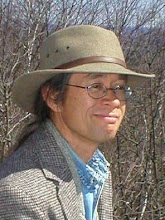
Later that day I happened to see a photo related to an old theatrical revue, and that brought to mind the word "blackface." I recalled a Wiscon panelist making passing reference to the vaudeville tradition, during an "Afrofuturism" discussion, that Sunday afternoon previous. The panelists had been addressing the question whether writers who were not tracing their personal, non-ancient ancestry to African sources might participate in helping create the body of creative works covered by this particular umbrella. The panelists noted that Afrofuturism itself, as a term, had been coined by a white observer. This to my mind seemed not quite akin to blackface performance, although somehow allied.

The term tied, too, to another strand of thought arising from the scattered panels that I attended over Wiscon's main three days. This related to the "default white." It seems that this term refers to a character's race when a story leaves race unspecified. The reader presumably assumes the characters are "white." The contemplative reader, it would seem, might further guess that the author assumed that the characters were so.

Do authors set out with a full knowledge of the racial make-up of their fictional characters? I am not at all sure — even being a writer who does spend time thinking about his characters, and who occasionally — I do think occasionally may be the right word — feels moved to consider "race" as a leading consideration during the creative act.

I feel quite clear about this being-not-at-all-sure: for by accident, or at least through no careful planning on my part, my Wiscon hours partly went into revisions on a new story. Between those work sessions, the panels I was attending made me ask myself, "Does my story reflect the racial diversity found in our world?" At first I thought not. Yet after revisiting the question at various hours during the days and nights of Wiscon, but especially in the relatively clear-minded morning hours when I devoted myself more to my revisions, I realized my ultimate uncertainty. In the story I was working on, I saw two characters, an off-stage son and an on-stage father, as distinctly Caucasian. The focal character, a woman, however, I saw with no such distinctness. I truly felt uncertain. Not until the convention was in its ending moments, when I happened to be talking about the experience of reading aloud my story the day before, did it sink in what she was, in racial terms.

Conversation can start a mind to improvising differently than it does in reflection, or in writing; and in this instance it opened to me connections between default whiteness and the woman character in my story, and between those thoughts and my own difficulty in knowing distinctly what sort of creature I am, myself, being partly one thing and partly another. I said, in this conversational moment, that I had been thinking about this idea of the default white, and had been considering introducing my story to the audience by saying that I feared all the characters in it were default white. In the event, when I looked out onto the room, which ended up surprisingly full, I saw myself addressing a white audience. Whether or not my perception encompassed the true state of things I naturally cannot say: for the reality of a performance situation is that the performer has some powers for observing her or his audience for a time, but then enters a state that is not altogether present to the room, being partly absent, to be inside the work offered. Yet I had this impression, and as a result made no comment about default white characters. The next day this incident arose to my tongue, and I said, to a friend newly made at the event, that there we were, four white writers reading to a white audience. I said that and fully participated in the meaning of the sentence without realizing the irony of the fact that I had just earlier said, in the same conversation, that I, myself, was default white.

"There we were." In that moment I called myself white. My self-image was weighted by the image of my father, Anglo-Swiss of background. In a mirror I see someone other than him. He whom I do see see is a familiar presence to me, as well as a familiar puzzle: yet in the context of a foursome of writers, the others of whom I assumed were white, who were speaking to listeners I assumed were white, I assumed of myself, too, whiteness. The assumption had nothing — absolutely nothing — of novelty in it. Forget about that Anglo-sounding name, Mark Rich: for in this weekend I had found my true name, initials D.W.

For I had said already in this improvisatory spiel that I was default white — as were my story's characters. I said this while still not quite seeing that the lead character in my story was white in the way that I was. In other words, she was, and she was not. I had been encountering such problems in thinking about this aspect of her character, while doing revisions there at Wiscon, because I have never resolved my thoughts about this aspect concerning myself.

I made these comments in one conversation, and, in another, I observed that this Wiscon had offered an accidental arrangement of events — mainly programming ones — that, for me, had an overarching narrative strand — so that I was for all purposes a character within that narrative.

I have long felt some awareness that this difficulty beset me, concerning what face I present to myself or to the world; and I think for that reason, probably microseconds after having the word "blackface" come to me upon looking at this photograph, days after Wiscon, I accepted without question the complementary term that then popped to mind — no doubt already coined and re-coined in times past:

Whiteface.

(Continued in next post.)

Moon Tea and Whiteface (II)

Part One, June 2014, continued

When driving away from Madison, north and west through quieter territory than that the city offers, all this struck me — what I had said, and how I said it: "There we were, four white writers, reading to a white audience." In that audience I had anticipated more obvious racial diversity than what I saw; and that anticipation had been what made me think about introducing my example of non-diversity with a spoonful of self-denigration — an admission of my failure to possess the sort of creative imagination that has as its default setting a vision of diversity, not one set in place by dominant-culture pre-setting and imprinting. I say self-denigrating, for I have a tendency that may be self-defeating, as an "artist" in our culture. For our culture rewards self-proclamatory artists over others; and this tendency of mine is to admit to my self-perceived shortcomings. I resist the tendency at times, even while embracing it as a sign that I am not overly self-deceiving — with self-deception being the Scylla to match the Charybdis of flattery.

"There we were, four white writers." At the reading I believe my mind had no such thought. At convention's end, however, I said this aloud. Even though I had just talked about having a "default white" way of viewing myself, which is not the same as saying that I have a white way of viewing myself, I used those words — "there we were" — perhaps so that I would have an unalterable fact to mull over while heading northeast.

I passed through few population centers, on my preferred route from Madison — towns with simple names that may embody white history and language: Plain, Loganville, Hillsboro. As far as I know they are mainly white-complexioned these days, although Hillsboro and its surrounding area once had a significant Black American component. Within Hillsboro a historical marker stands to commemorate either their former presence or their current semi-absence, since that particular community, a century or more ago, left the area.

Whiteface? However white that area might appear today, its history, in the time since the Native American expulsion, contains more than simply white history. In the Afrofuturism panel the term "one-drop rule" arose several times, with the panelists assuming the audience knew its meaning. Does that rule apply to village or town? In an organism, a one-drop rule must pertain to its entire life. In a community, too?

In a way, in my inadvertent statement — "there we were" — I demonstrated what I already had said of myself, in my of-the-moment realization that whatever I may be, I have felt uncertain enough about its nature that the course of least resistance has made me, in self-image, white. Although some individuals in my life have seemed to see my Japanese-ness, they may have known my parents first. In meeting Japanese people I usually feel the need to announce my being half-Japanese — as if certain that this cannot be seen. At such moments I believe that, in some way, perhaps in a purely symbolic way, I am a white man who, when he speaks, becomes non-white.

To make a gross generalization about the Japanese, they, or we, are realistic. While being realistic can lead to a certain hard-headedness, it may point toward adaptability, as well.

To make a gross generalization about Sansei, who are third-generation Japanese immigrants in America, we (I leave out the "they," since I have never had a question about being Sansei) tend to assimilate rather than stand back in order to assert our racial or cultural heritage. I have no idea, truthfully, if this tendency actually prevails among Sansei. Yet that it does exist in the group forms one certainty, in my mind full of uncertainties. Bill Hosokawa wrote a book entitled Nisei that chronicles contributions in America by second-generation immigrants, who were not only inventive and industrious but also clearly conscious that they occupied a distinct place among "Americans," generally speaking, in being Japanese. The U.S. government made sure that this awareness remained bedrock in their minds, through its actions during World War II; and the awareness helped give the Nisei a group-sense. No such similar experience strengthened the Sansei group-sense. That we had Japanese backgrounds no one was making quite so distinctly, vocally, or socially an issue.

I know I am more curious about my Japanese cultural roots than some in my generation: for some do seem content to erase their Japaneseness in becoming part of that "Americans, generally speaking" group. Yet I may feel more open to my Japaneseness because my mother, in marrying my Anglo-Swiss father, half-erased my Japaneseness on my behalf. My own Sansei tendency to erase my Japaneseness, to "assimilate" myself, has less to work with, while my curiosity and inclination to draw out my Japaneseness has more, since my already-assimilated "white" self can be whole-heartedly curious, when it wants to be.

The question rises, as I write these thoughts, as to what I saw when I looked in a mirror, as a child. Did I even look? As a child I was, of course, short. The bathroom mirror hung in its usual place, at adult eye-level above the sink. My parents had, as I recall, a full-length mirror on the inside of their bedroom door, into which I rarely peered. Even when I did, who knows what I saw. I remember when I was young and my younger sister was a year or two old, that she had the lightest brown hair — the hair, I am supposing, of my father's mother, Ada, whose lightness of hair and complexion seems to have been part of her Woodbridge inheritance, the inheritance that gave my father an appearance markedly different from the men of the Rich family of my grandfather's generation. They were large men with prominent brows, strong jaws, and hair dark enough to pass for Japanese. At a few years old, my sister looked more Woodbridge — as it seems to me now. She later acquired an appearance with more Kikuchi elements, to my eyes.

As we grow older the images we take to the mirror change — as do our inner resources for seeing, not-seeing, or reinventing the reversed object, the backwards fact, that we find looking at us.

As it happens, the short story I read aloud, Saturday at Wiscon, included a passage in which the woman character — the one whose racial identity I feel uncertain about but who is, all the same, as I am — looks into a mirror, not at herself, at first, but at a cloudy image that seems to be there, behind her.

(Continued in next post.)