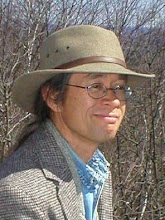
In the four or five years before the summer of 2008 I worked largely outside science fiction, writing steadily for toy- and antique-collector books and magazines, and pursuing part-time jobs that included antiquing. My partner Martha Borchardt and I also headed two central-Wisconsin rock bands, one electric and one acoustic. A car and the ability to drive it came into my life — in that order. When Martha and I used this novelty of mobility to move to Cashton, a village in the west of Wisconsin, band activity gave way to old-house maintenance. Unexpectedly, my mainstay magazines, for whom I wrote five to ten thousands of words per month, abruptly died. The Internet, whose first impact had been to open the gates for the editorial matter I supplied by the ream, now killed off print magazines at my two main publishers. Constantly looming deadlines had driven me forward for four years; and only when contracts appeared in my hands did I write my books. Having now neither deadlines nor contracts, when I began pursuing new ideas I felt skittish and uncentered, overly beset by small exigencies to labor with full concentration. Even so, in fits and starts, by 2008 I was returning to the kinds of writing that meant most to me.
That summer I drove to Denvention, the World Science Fiction Convention in Colorado. Roger Dutcher, an old friend from Beloit, town and not gown, came along to share experiences and expenses. My wallet being mostly empty, the commonplace illusion of plastic solvency buoyed me. Some hope-inspiring portents helped: for RedJack Books was launching my third story collection, Edge of Our Lives, during the event; and an ink drawing of mine that had hung at the 2007 World Fantasy Convention was a Chesley award nominee. I headed west into debts and promises, prepared to accept any writing opportunity that came my way, remunerative or not.
Something of a journey of the psyche hung over this trip. We traveled unhurriedly over two-lane highways from Iowa across Nebraska and half across Colorado. On these often empty roads the quiet, great spaces of those inner-continental states took us in, absorbing yet expanding our tiny souls. In moving westward I headed home, in a sense: for from a suburban house outside Denver as a young teenager in the early 1970s I had entered the world of the fantasy small press, and made my first, most minor launches into the publishing world. Small prairie towns, somnolent and depressed at being situated away from the mass channels of Interstates, seemed more familiar to me than Denver did, however, once we reached that destination. Except for seeing the city through Amtrak windows, I had not returned since leaving there early in my high school years. Yet the sense of return came over me all the same when walking between the far-spaced convention hotels, thanks to faint odors rising from sidewalk sewer grates. Something remained unchanged.
Bob Silverberg, the first familiar soul I encountered, had studied the program schedule already when we met, and lamented that the two main items about older science fiction were placed against one another: his Olaf Stapledon panel, and my Kornbluth. Later I encountered Alex Eisenstein, the only person I know who can spontaneously and accurately quote lines from Kornbluth's stories. He told me he was responsible for my placement as panelist. The convention organizers had no clue why Eisenstein thought I could contribute. I would have enjoyed Silverberg's panel, in part because Stapledon occupied a place in the literary firmament when Cyril was first writing. I doubt Bob would have enjoyed mine, however. It focused so heavily on story recaps, presumably for uninitiated audience members, that I found few opportunities to raise what I considered to be important issues about Kornbluth's life and works. What an interesting audience we had, on the other hand: for it included younger readers recently taken by Kornbluth, possessed by curiosities and excitements that seemed akin to mine. Their comments, when they approached me afterwards, impressed me more than our panel comments did.
I spent time before and after that panel chatting with Mark Durr about the difficulties of establishing the facts of Kornbluth's life with any certainty. I once wrote a history of two college museums, still unpublished today, in which I included nothing which I could not document: for I needed to dispel mistaken conceptions that prevailed, concerning their beginnings. Were I to tell the Kornbluth story, I said to Mark, I would approach it in the same spirit. He said he would love to be selling such a book. When afterwards I formally approached McFarland I proposed two books — a minor one on Kornbluth, to be of limited scope due to the dearth of materials, and a second, Science Fiction, Toys and Society, that was to be the more expansive effort involving historical narrative and cultural criticism. Once the contracts arrived and I began my work, however, I found the Kornbluth task nearly all-absorbing. That autumn, winter and spring I would manage to complete other work: an introduction to a Jules Verne reprint, and an introduction and editing job on a Poe collection, for Engage Books; and early work on a study of Judith Merril's fiction, for Aqueduct. A scattering of smaller writing tasks occupied me as well. Overwhelmingly, however, the Kornbluth effort took over my life and being. I was entering some of the longest months of my life, when the questions that had ridden me and haunted me for over a decade became my masters.
I possessed what seemed to me great advantages. Of the documents I so greatly desired, I had managed through the years to add a precious few to my research library: Cyril's note-card records of his early fiction submissions; and Cyril's and Judy Merril's notes and outlines for Gunner Cade. Also in hand I had a ten-thousand word exploration of Kornbluth's fiction, using the miniature work "Everybody Knows Joe" for a pivotal point of perspective. In the early aughts I had written this piece and submitted it to a 1950s-themed issue of Paradoxa; and although the manuscript reappeared in my mailbox, I retained faith in both its approach and the inter-textual connections it made. It gave me the kernel for the book's second section, focusing more upon the fiction than the life. Beyond these, I had notes and correspondence from my Kornblume days, including invaluable letters from Cyril's brother Lewis.
Despite such advantages no part of the work came easily. Assembling a chronology, even with the skeleton of listed publications, proved a task that took almost as long as the book's writing. While I knew certain important events occurred in Cyril's life, pinning down dates, places, and sequential order proved extraordinarily difficult. Since I aimed to establish a factual basis for future Kornbluth studies, I spent hours and sometimes days struggling over minor events, miniature mysteries, minuscule facts. I wanted those following in my footsteps to have advantages I lacked, during that long period of puzzling, often fruitlessly, over a long-dead man's life.
I set aside accounts by Pohl in my initial task. To all appearances he exerted proprietary control over public memory of Cyril — perhaps naturally, after having been so enriched by The Space Merchants. Yet that strong, widely propagated sense of proprietary control made me cautious about his statements: for he had motivation, consciously or subconsciously, to recall matters in ways that shined favorably upon his own situation. I rued that his influence was such that older members of the field deferred to him, and told me that, of course, my best sources of information were Pohl and The Way the Future Was. One question that pressed upon me — the question of who Cyril's friends were — existed in large part because everyone seemed to know the answer, and to point to the single man. I had doubts; and I had reasons for these doubts — such as the fact of Cyril's and Judy Merril's depiction of Fred in Gunner Cade; the fact that Pohl stood far removed from the early Wollheim magazines that proved all-important in Cyril's early development; and the fact that Pohl had a role in neither the first Milford conference nor The Five. Among other considerations, these made me decide initially to assemble a picture based on whatever other sources I could find, and only afterwards to inject Pohl's published perspective. In this way I hoped to develop an account with a more realistic balance among Cyril's sphere of friends, acquaintances, allies, and foes.
I pursued this course for months, until chance re-connected me with Canadian scholar David Ketterer. The two of us had met at a Poe event in the late 1980s, before my Kornbluth interest became so overridingly a concern. A day or two after the conference he and I shared a meal in which he spoke of his continuing interest in James Blish. The conversation may have helped nourish my sense of sympathy with the Futurians, when I began revisiting their writings a few years later. I remember no mention of Kornbluth, at this dinner; and from what I recall of Ketterer's book on Blish I believe he knew little or nothing of the friendship. If Judith Blish told him what she did me — that Jim never got over the death of his best friend Cyril — then it failed to strike the chiming note for David that it did for me.
As I recall, I had queried John Clute on some matter regarding the Dirk Wylie Literary Agency. At the time I was on pins and needles concerning Pohl's handling of the agency: for Asimov and others who mentioned it had written only vaguely on the matter, at least in published accounts. As a topic, had I had any choice in the matter, I would have skirted it altogether. My subject allowed me no such luxury, however. Clute noted that Ketterer was writing a biography of John Beynon Harris, also known as John Wyndham — who had been a Wylie client. Clute reconnected us. From David, I learned that agency correspondence relating to Wyndham resided in Syracuse University archives, in the Frederik Pohl papers. The notion that Pohl papers existed anywhere came as a tremendous surprise and relief. By happy chance, the University library had recently expanded its on-line catalog of holdings. According to this list, the archive's Frederik Pohl papers included a file bearing Kornbluth's name. The news floored me.
In 1994, in the first issue of Kornblume, I had entitled one section "Correspondence." There I asked, in reference to archives, "Are there any holdings that include CMK correspondence?" Numerous writers including Pohl received that issue. I recall asking Charles N. Brown this question, in person at a later convention. He knew of none. Before my communication with David Ketterer, I had asked Bob Madle if he had ever encountered Kornbluth correspondence in his many years of dealing with fan materials. Never, said Madle — who wondered if perhaps Cyril never wrote letters.
Ketterer's breaking of this long silence, this long expanse of blank wall, provoked a minor crisis. Only a few months remained to me before my deadline. The time had come to tighten my narrative, to focus on refreshing and extending my literary analyses, and to revise the whole. I had only partially paid off the Denver trip, and felt downcast about likely being unable to visit Syracuse. I dwelt on the matter for days, even while knowing I faced not a choice but an imperative. Martha, too, knew this, and offered to dip into emergency funds. While I refused that offer, I resolved to do exactly as much as I could. I could just squeeze onto my credit card the necessary rail travel and three hotel nights, giving me nearly four days of research — if perhaps no meals. I made my arrangements, packed food, and set out, using the long, late-winter train ride for renewing my acquaintance with a dozen old paperbacks I carried along. In Syracuse I spent every available second in the archives, without lunch breaks. Evenings I spent in the main library stacks pursuing other questions, some for the biography and some for reference-book entries for which I had contracts. Since the archives held not only Pohl's early correspondence but also Knight's papers relating to The Futurians, I had on my hands more pieces of the puzzle than I could take in fully. Yet in the slender Pohl-Kornbluth files I found considerable material for documenting a narrative whose shape I had been beginning to perceive, but which I had feared I could do no more than suggest. Aspects of the tale which I feared would end up excised, due to lack of documentation, now could remain. New elements, moreover, would now enter the manuscript. The unfolding details, as revealed by this correspondence, proved more disturbing to me than the story I had thus far reconstructed; and though I was already waking midnights with my mind full of haunted wonderings, I headed now into months of waking midnights haunted, instead, by painful knowledge.
I spent enough time with Damon's transcripts of interviews for The Futurians to make me respect his research methods, and to regret his published presentation: for I learned that much of his book consists of direct quotation from his fellow Futurians. The reader rarely knows, from paragraph to paragraph, however, when someone other than Damon is speaking. I suspect Damon pursued this course out of personal necessity, due to the difficulty he was experiencing in writing anything at all, after long blockage.
I left Syracuse with many pages of penciled notes and the promise of photocopies via mail — and with head and heart both lighter and heavier: for I nursed a transformed hope for the biography, while feeling, more fully than ever, the weight of another's life upon my shoulders. I would discover the irony of the situation much later, when looking back at my original query in Kornblume: for my 1994 question arose after learning that Richard Wilson's Transradio papers resided at Syracuse. This suggested a vague possibility: that some of Cyril's UFO releases might be found there. Although I was coming to appreciate the long and never broken friendship between Cyril and Dick Wilson, his first collaborator, the sad fact was that once I reached Syracuse, fifteen years after my 1994 question, I lacked time to pursue that avenue of inquiry.
A similar experience to the one in Syracuse developed out of a comment made by James Gunn, who told me that materials which had included Kornbluth correspondence, and which had been offered to University of Kansas, may have ended up at Northern Illinois. I received confirmation from archivist Lynne Thomas, and made that trip by car soon thereafter. I found there an unexpectedly rich vein — tiny in comparison to the Syracuse holdings, but invaluable. I had felt curious about the fact that Pohl spoke of Kornbluth in general terms in early appreciations, and then at a later point wrote as though suddenly possessed of factual information. I had no idea how much to trust these later accounts. At NIU I learned that I could trust them — for there, at NIU, reside Pohl's letters of 1981 asking Cyril's father Samuel and brother Lewis for material about Cyril, since Fred himself felt "written out" on the subject. Pohl subsequently used Samuel's and Lewis's information without, to my knowledge, any public acknowledgement. In my book I cited the letters from Kornbluth's father and brother, and left Pohl's introductions uncited.
Also at NIU I found the wonderful photograph of the youthful Cyril that graces the biography's cover. While I had hoped to find a good-quality image of Cyril as an adult, from the 1950s, this image fully answered my need for a striking cover photograph. Taken in the 1940s, it captures the serious aspect of young Cyril, with the saddened set of the eyes that fellow Futurian Johnny Michel had considered revealing and characteristic.
End, Part Three.